
Propaganda: Mechanisms, Techniques, History, and Contemporary Faces
1. Introduction
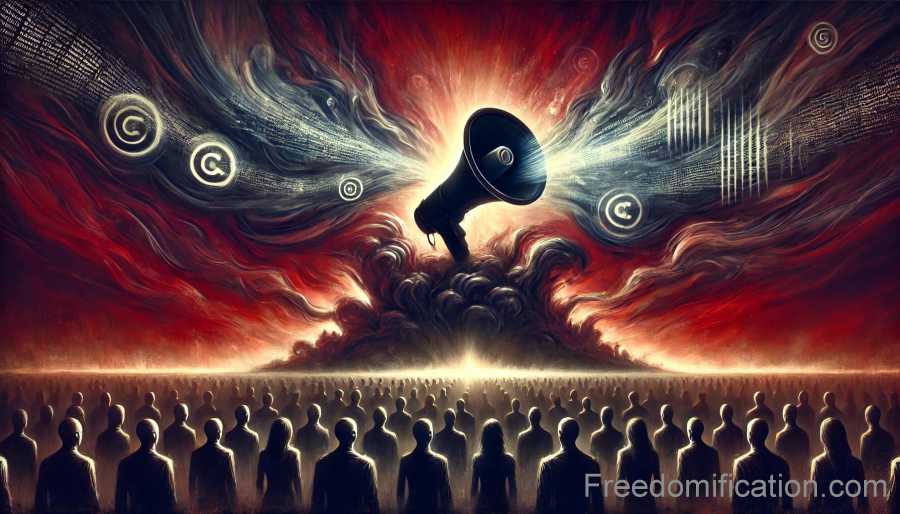
Propaganda is one of the most powerful tools for shaping public opinion, influencing the masses, and maintaining power. Used for thousands of years by rulers, religions, governments, corporations, and the media, it plays a crucial role in political, economic, and cultural realities. It can serve both positive and destructive purposes, making its analysis essential for understanding the modern world.
2. Definition and Importance of Propaganda
Propaganda is the systematic and deliberate dissemination of information, ideas, or beliefs to influence public opinion, emotions, and behaviors. It can take overt or covert forms, aiming to persuade audiences to accept specific beliefs or take desired actions.
Unlike neutral education or reporting, propaganda often manipulates facts, employs emotional messaging, and uses psychological persuasion techniques. Depending on the context, it can be used positively (e.g., promoting a healthy lifestyle) or negatively (e.g., spreading hatred against specific social groups).
| Aspect | Democratic Countries (e.g., USA, France, Germany, Poland) | Authoritarian Regimes (e.g., Russia, China, North Korea) |
|---|---|---|
| Access to Information | Free media, pluralism, diverse sources, public debate | Media fully controlled by the state, limited access to alternative sources |
| Censorship and Repression | None or minimal, rare cases of political pressure | Strict censorship, website blocking, repression against journalists and opposition |
| Criticism of the Government | Allowed and common, open debates | Harshly punished, may result in imprisonment or death |
| Manipulation Methods | Bias, selective presentation of facts | Distortion of reality, total narrative control |
| Degree of Falsehood in Messaging | Usually a shift in emphasis but based on facts | Often based on lies, conspiracy theories, and disinformation |
| Role of Technology | Social media increases diversity of opinions | Algorithms promote the official narrative |
| Impact on Society | Critical analysis of messaging, possibility of debate | Brainwashing, no alternatives to the official version |
3. History of Propaganda
- Ancient Times: Egyptian reliefs and Roman inscriptions portraying rulers as divine leaders were among the first forms of propaganda. Ancient Greeks and Romans used public speeches and art to shape public opinion.
- Middle Ages: The Catholic Church used propaganda to strengthen its position through iconography, sermons, and the Inquisition. The Crusades were justified through propaganda depicting Muslims as a threat to Christendom.
- Modern Era: The Reformation and Counter-Reformation led to the development of religious propaganda. The printing press, invented by Gutenberg, enabled the mass spread of ideas.
- 20th Century: Propaganda reached a mass scale during the Bolshevik Revolution, Nazi Germany, and the Cold War. The Nazis used propaganda to spread antisemitic ideology and justify their policies. During the Cold War, both the USA and the USSR used propaganda to demonize their opponents and mobilize their citizens.
- Contemporary Era: Disinformation in social media, fake news, and recommendation algorithms shape people’s perception of reality. Governments and international organizations use modern persuasion methods based on data analysis and behavioral psychology.
4. Propaganda Techniques
- Repetition: Repeating a message in propaganda is one of the oldest and most effective tools of persuasion. This phenomenon is known as the “illusory truth effect.” It means that the more often we hear a piece of information, the more we tend to perceive it as true, even if it is actually false. Psychology shows that our brains tend to consider repeated information as more credible. In propaganda, repetition not only strengthens the perception of truth but also helps create a dominant image of reality where the repeated narrative becomes the norm.
Example: In wartime propaganda, such as during World War II, both Nazi Germany and the Soviet Union repeatedly spread their messages about the “great struggle” against enemies, which was intended to create a unified national consciousness based on war.
- Demonization of the Enemy: Propaganda that demonizes the opponent is a technique used to portray the enemy as a threat to society, or even to its very existence. This tactic creates a strong “us vs. them” divide, where “they” are depicted as pure evil. Demonizing the enemy dehumanizes them, which justifies aggression toward them. This method has been used historically in the context of totalitarian regimes, where propaganda was a tool to mobilize society.
Example: In Nazi propaganda, Jews were portrayed as “eternal enemies” of Germany, responsible for many social and economic problems, which helped lay the groundwork for the Holocaust. Similarly, the Soviet Union depicted Western democracies, particularly the USA, as imperialist threats to communism and world peace.
- Disinformation: Disinformation involves the deliberate spreading of false information with the aim of manipulating public opinion. It differs from simple informational errors because it is intentionally disseminated to mislead, sow uncertainty, or weaken the opponent. Disinformation can take the form of fake news, manipulated images, videos, or rumors that alter the way people perceive events or situations.
Example: During the Cold War, both the Soviet Union and the USA used disinformation to undermine trust in each other. One example is the disinformation campaign about the U.S. missile defense program (SDI), which the Soviet Union used to sow doubts about American plans.
- Emotional Manipulation: Manipulating emotions is one of the most powerful tools in the propagandist’s arsenal. Emotions such as fear, anger, or national pride are often used. This technique is especially employed in election campaigns, where politicians try to evoke strong emotions in voters that will lead them to make decisions in line with the manipulating party’s interests. Stirring up fear of external or internal threats can steer society down a particular political path.
Example: During election campaigns in various countries, populist politicians often appeal to fears about immigration, portraying foreigners as a threat to national identity. The fear of “the other” is a strong motivator that drives action to defend the “purity” of society.
- Authority and Testimonial: In propaganda, authorities—experts, celebrities, or even ordinary people—are often used to confirm or legitimize a particular narrative. People are more likely to believe something if it is said by someone they perceive as an authority or someone they trust. This could be a famous scientist, actor, politician, or even individuals who “just know” about a topic. Authorities serve as tools to legitimize propaganda content.
Example: During World War II in Germany, propaganda used the images of well-known scientists and artists who supported the government’s policies. Similarly, in many totalitarian countries, “folk heroes” were used to publicly support the government’s ideology.
- Selective Presentation of Facts: This technique involves presenting only the information that supports a particular narrative while omitting information that could undermine it. Selective presentation of facts doesn’t necessarily mean direct lying, but it involves consciously ignoring data that might be inconvenient for the propaganda. Often, the information is contextualized or presented in a way that serves a specific goal.
Example: In state-run media in authoritarian countries, selective presentation of facts is often used, showing only government successes while omitting information about protests, economic crises, or human rights violations.
5. Types of Propaganda
- Political: Election campaigns, government narrative manipulation, ideological social campaigns.
- Wartime: Creating hatred towards the enemy, e.g., Nazi wartime propaganda or American propaganda during World War II.
- Advertising: Crafting a positive image of a product through psychological manipulation and emotional messaging.
- Religious: Spreading certain beliefs through narratives based on fear, reward, or punishment.
- Social: Campaigns related to health, ecology, or safety, e.g., anti-smoking or climate change awareness campaigns.
6. Propaganda in the 21st Century
- Social Media: Creating “information bubbles” where users only receive content that aligns with their pre-existing beliefs.
- Fake News and Deepfakes: Manipulating images and recordings, leading to large-scale disinformation.
- Statistics as a Manipulation Tool: Selective presentation of data, misleading use of graphs.
- Censorship and Disinformation: Governments and corporations controlling access to information, eliminating unwanted narratives.
- Russian Wartime Propaganda: Constructing narratives to legitimize military actions through historical manipulation, enemy demonization, and spreading conspiracy theories.
7. How to Defend Against Propaganda?
- Critical Thinking: Analyzing sources, fact-checking, comparing information.
- Understanding Manipulation Techniques: Recognizing recurring propaganda patterns.
- Avoiding Information Bubbles: Actively seeking diverse perspectives, avoiding extreme media biases.
- Media Literacy Education: Learning content analysis, identifying fake news, using media consciously.
- Verification Tools: Using fact-checking websites, analyzing sources of information.
8. Conclusion
Propaganda techniques are interconnected and can be used simultaneously to strengthen the effect of manipulation. Propaganda is a powerful tool that can serve both positive and negative purposes. In the digital age, its influence is stronger than ever. The key objective of propaganda is to shape public opinion, control the narrative, and instill an ideology that can be exploited for political, social, or economic gain. To effectively resist manipulation, it is essential to understand its techniques, critically analyze information, and develop independent thinking skills that will allow us to recognize and understand the hidden motives behind media messages.